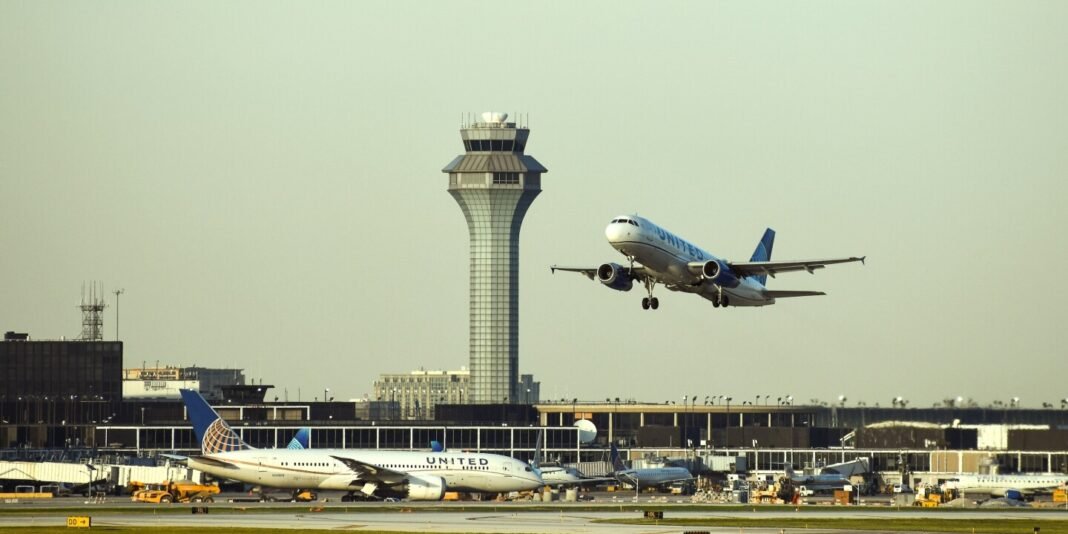


Flights at Chicago O’Hare International Airport (ORD) will be reduced by more than 300 flights per day this summer under a new federal directive aimed at preventing cascading delays that increasingly define peak travel periods at one of the nation’s busiest hubs.
The Federal Aviation Administration ordered airlines to limit their operations to O’Hare Airport to a total of 2,708 flights per day, a significant reduction from the approximately 3,080 flights airlines had planned for each day, according to the FAA. The adjustment reflects a growing mismatch between the number of flights airlines want to operate and the number of flights that airports and surrounding airspace can currently reliably accommodate.
“Our top priority is the safety of the flying public, and that means ensuring airline schedules reflect what the system can safely handle,” FAA Administrator Brian Bedford said in a statement. “We appreciate the airlines working with us to reach a level of responsible operation that enhances safety and provides a more reliable travel experience for Americans.”
Originally scheduled to take effect on May 17, the cap will now be in place from June 2, 2026 to October 24, 2026. In an amendment to its original order, the FAA said it delayed the start date to “give operators sufficient time to reschedule certain crew members already assigned to the 2026 summer scheduling season.”
The cuts will reduce flights during a period when airlines typically expand their operations to meet increased travel demand over the summer. But the FAA said the proposed 2026 schedule would be far beyond a safe and reasonable schedule for a hub airport, especially given ongoing air traffic control staffing shortages, airfield construction, and persistent congestion in Chicago area airspace.
What are the problems with flights at O’Hare Airport?
O’Hare serves as a central node in the U.S. aviation system and is a major hub for United Airlines and American Airlines. Airport layouts with multiple intersecting runways and tightly coordinated arrival and departure banks require significant air traffic control resources to operate efficiently at scale.
The airline had previously planned to increase service by about 15 percent from a year ago, building on an already strained system. Last summer, less than 60 percent of flights departed on time (on-time departure is defined as taking off within 15 minutes of the scheduled departure time). Federal officials said the cap was imposed after reviewing the expanded schedule in light of current operating restrictions.
“When you book a flight, we want you and your family to have confidence that you and your family will get on the plane without endless delays and cancellations,” U.S. Transportation Secretary Sean Duffy said in a press release announcing the changes, adding that the cap “will reduce delays and make this busy summer travel season a little easier.”
A key constraint is staffing. The FAA is working to rebuild its air traffic control workforce following shortages caused by early retirements and suspended training pipelines during the COVID-19 pandemic, but the process is inherently slow. To become a fully certified air traffic controller, you must pass a rigorous aptitude test and medical exam, complete training at the FAA Academy, and then spend several years in facility-specific on-the-job training before working independently in traffic operations.
Beyond staffing, O’Hare continues to struggle with infrastructure limitations. Ongoing construction projects are reducing the airfield’s available capacity, while summer thunderstorms regularly disrupt the flow of arrivals and departures, further exacerbating busy-season congestion.
What this means for future flights
Airlines are being asked to adjust their schedules in advance to comply with the cap, rather than canceling flights on the same day. Flight reductions will be allocated based on airline-approved summer 2025 schedules, so airlines already know how many flights each will need to reduce. In practice, they could reduce the frequency of departures on certain routes, shift capacity to larger aircraft, or temporarily suspend some flights.
These changes will be felt beyond Chicago, as O’Hare is such an important connectivity hub. Arrival and departure bank adjustments can ripple through the airline network, impacting system-wide connectivity and aircraft utilization.
But the FAA says the measure is intended to reduce strain on the system by adjusting schedules to match airspace availability. The flights they operate are less likely to face the cascading delays that occur when airport schedules are overrun.
As of this writing, neither American Airlines nor United Airlines, the two carriers with the largest share of flights departing from O’Hare, have released any information about which flights will be eliminated. “We are reviewing the FAA’s order and will share additional information, including next steps, once our review is complete,” United said in a statement.
For now, the FAA has indicated that this cap will remain in place from the end of the summer peak season through the early fall travel season, and may be adjusted based on staffing levels and operating conditions.