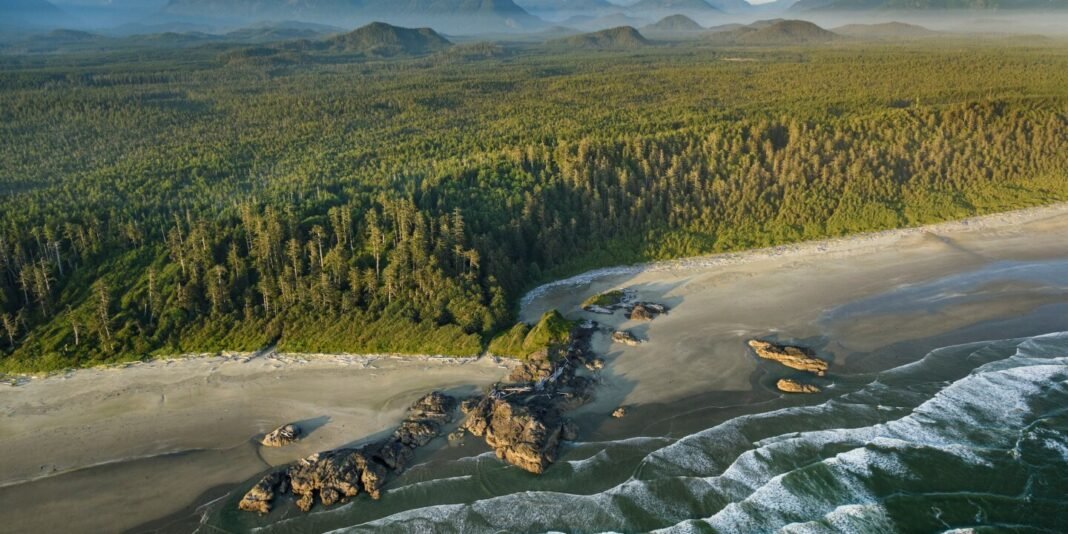


From the turquoise glacial lakes of Banff National Park, the icefields and alpine canyons of Jasper National Park, the surf-lined beaches and pristine rainforest of Pacific Rim National Park Reserve to the glacier-carved fjords of Gros Morne National Park, Canada’s national parks offer an incredible diversity of landscapes.
Access will also be easier this summer. From June 19 to September 7, all Parks Canada properties will waive admission fees, opening the country’s famous parks, historic sites and marine reserves free of charge to all visitors during peak travel season. Park admission fees typically range from $5 (USD) for smaller, quieter parks to $18 for the most popular parks.
The move is part of a broader federal tourism push known as the Canada Strong Path, aimed at boosting travel during Canada’s busiest season. In addition to free admission, Parks Canada is also offering 25 per cent off camping and lodging at participating sites. This is a notable incentive as demand for travel to national parks continues to rise as travelers face higher airfare and lodging costs.
This program does not require visitors to register or obtain a physical pass. Parks Canada sites automatically waive admission fees, making this benefit available to all visitors regardless of nationality (as opposed to some international park systems, such as the United States, where non-residents must pay higher fees). The policy applies to national parks, national historic sites, and national marine sanctuaries, but not to state park systems. The state park system will operate separately and continue to charge standard fees.
Please note that most campsites require reservations, but are not free and are discounted. Prices for parking, guided experiences, and amenities such as hot springs and firewood remain the same.
Overall, the fee waiver applies to the entire Parks Canada network, which spans more than 40 national parks and park reserves, 171 national historic sites, and five national marine reserves. Here are some outstanding public spaces on offer that you may want to consider adding to your summer plans.
banff national park
Canada’s most famous park is home to surreal glacier-fed lakes, among them the famous Lake Louise and Moraine Lake, but what sets it apart is how much diversity is packed into the relatively accessible Rocky Mountains.
In summer, trails like the Plain of Six Glaciers and Lake Agnes climb steeply past the most popular viewpoints to teahouses and glacier views. Meanwhile, the Lake Minnewanka loop provides a quick introduction to the eastern valley of the park and increases your chances of seeing bighorn sheep and elk.
Fathom Five National Marine Park
Located in the clear waters of Georgian Bay off the coast of Lake Huron, Ontario, this freshwater marine park is best known for its shipwrecks, many of which can be seen from the surface due to the water clarity. Divers and snorkelers can explore the shipwreck up close, and Flowerpot Island is accessible via boat tours and kayak routes. There, towering rock pillars and sea caves define the coastline.
L’Anse aux Meadows National Historic Site
This UNESCO World Heritage Site on the northern tip of Newfoundland marks the only confirmed Viking settlement in North America. Visitors can walk through restored lawn buildings, see the archaeological remains of the original Norse encampment, and learn how explorers from Greenland lived here more than 1,000 years ago, centuries before Columbus reached the continent.
Pacific Rim National Park Reserve
Stretching along the west coast of Vancouver Island, this park includes temperate rainforest, driftwood-strewn beaches, and a rugged Pacific coastline. The Long Beach unit attracts the most tourists, with wide sandy beaches popular for surfing, while the Broken Group Islands attract kayakers looking to explore Berkeley Bay’s protected coves and more than 100 small, forested islands. Short walking loops like the Rainforest Trail provide an easy way to explore the region’s dense moss-covered native forest ecosystem.
prince edward island national park
Stretching along the north shore of this Nova Scotia island, this park trades mountains for red sand beaches, rolling dunes, and sandstone cliffs shaped by the Gulf of St. Lawrence. In the summer, visitors come for long shoreline walks, gentle cycle routes, and protected beaches dotted with shorebirds (the area’s sandpiper). The park also includes the inspirational Green Gables Heritage Place, farmhouse and surrounding landscape. Anne of Green Gablesgiving it a unique literary connection.
Further west on the same island, Pituamkek National Park Reserve was established in 2024 to protect the Hog Island Dunes, a fragile system of barrier islands and shifting dunes. For now, it’s more of a site to keep an eye on than something to add to your summer itinerary. The site is still being developed in partnership with the Mi’kmaq Confederation of Prince Edward Island, an indigenous community, and there is no official visitor infrastructure yet. Once fully open, it will offer a completely different kind of park experience centered around strengthening the relationship between the Mi’kmaq people and Canada’s parks system.