

Summer is just around the corner, and all signs point to it being a travel season like no other.
These signs may be of particular concern to anyone planning a transatlantic trip in the coming months. Problems are well known at EU points of entry when Schengen countries moved to a digital border system this month. Officials have also suggested that European airlines and airports are likely to run out of jet fuel as the Iran conflict drags on, cutting off oil flows from the now-closed Strait of Hormuz.
In mid-April, International Energy Agency chief Fatih Birol warned that airport fuel pumps could take six weeks to empty. If that time holds, many passengers bound for Europe could feel the effects right after Memorial Day. Willie Walsh, president of the International Air Transport Association (IATA), warned that Asia, Latin America and Africa were also at risk of a crisis caused by similar shortages.
But experts disagree on how serious the shortage is and how long it will last, with some pointing out that certain parts of the world, such as the United States, are not experiencing fuel shortages. Of course, for those planning a trip, that’s small consolation outside US
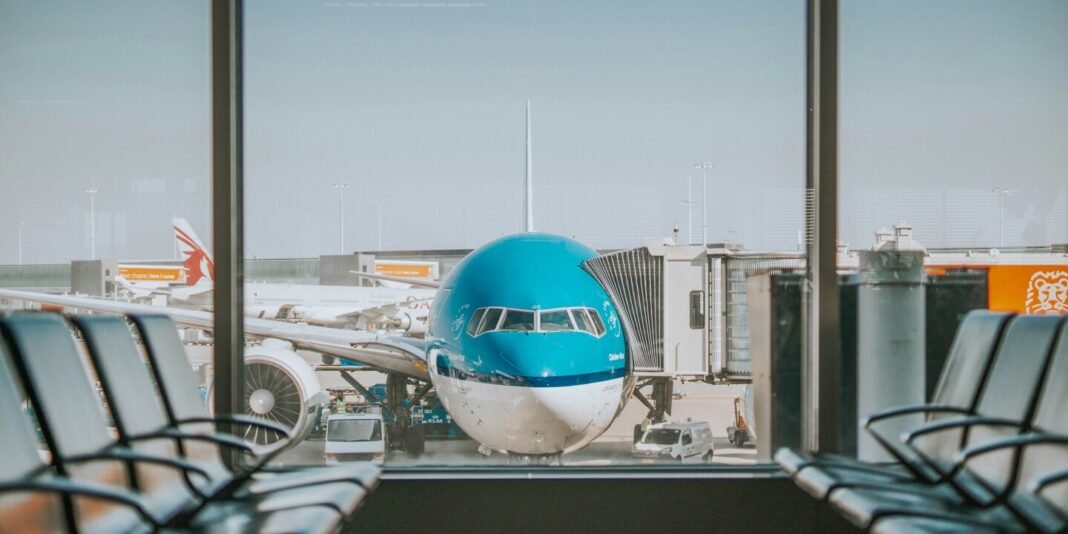
Some airlines are already aggressively reducing their schedules, with Lufthansa cutting about 20,000 flights through October, mainly on short-haul routes within Europe. KLM Royal Dutch Airlines has announced reduced flights on major hub routes including London. Spain’s Volotea Airlines has taken the controversial step of retroactively imposing fuel surcharges on tickets already booked, with reports that some smaller airports in continental Europe are rationing jet fuel.
Other airlines may follow suit. IATA’s Mr. Walsh said in an interview that an early end to the war and the reopening of the Strait of Hormuz would not end the jet fuel crisis. “It will still be several months before we get back to where we need supplies.”
Gordon Ho, a professor at the University of Southern California’s Marshall School of Management, told Afar that European airlines import 30% to 40% of their jet fuel, making them “much more vulnerable to supply shortages” than U.S. airlines. He said airlines are not just canceling flights, but are also taking measures such as cutting capacity on less profitable routes, raising fares and adding surcharges.
“Ultimately, depending on the length of the fuel supply disruption, the effects of this fuel shortage could continue throughout the summer and beyond,” he said. “Jet fuel prices have doubled around the world, and we expect continued price hikes and fuel surcharges for airlines around the world.”
He points out that even though we don’t have a shortage of jet fuel here in the U.S., it’s still expensive to fill up planes, and all airlines are feeling the effects of rising prices. That cost has nearly doubled since the start of the war, and we’re already seeing airlines pass some of that cost on to travelers in the form of increased checked baggage fees.
Some see this as a temporary setback. “It’s a problem now, but it’s a short-term problem. I don’t think we’ll be talking about it in six months,” said Michael Durchin, a longtime Wall Street aviation analyst and founder of Darchin Airlines Research.
He said part of the reason is that stronger airlines take steps to absorb fuel price shocks. “They will adjust by cutting capacity,” he said, noting that “of course that’s bad for consumers because cutting capacity means higher fares and more expensive travel.”
In the case of fuel shortages that can lead to cancellations, airlines give you advance warning of the problem rather than flight interruptions due to normal causes such as strikes, technical problems, or bad weather. Still, the usual rules apply to prevent you from getting stranded. That means signing up for flight alerts in advance, purchasing travel insurance, and knowing your travel rights in the EU, which has stricter coverage requirements than the US.
“An airline can’t just cancel a flight and say, ‘Sorry, we can’t afford to operate it. We don’t have enough fuel. We’ll refund your fare,'” travel expert and columnist Simon Calder wrote in a recent post. independent person. “If you fly on a European airline, or if you fly from anywhere in Europe, the airline must find an alternative way to get you to your destination on the same day if possible.”
Ultimately, it will be up to consumers to decide whether the additional cost and risk is worth it. “Certainly some people may be considering whether to give Europe a pass this year,” said Joe Brancatelli, who runs the travel website Joesentme.com.
And not all European airlines are sounding the alarm. Hungarian low-cost carrier Wizz Air has downplayed the impending jet fuel crisis, insisting instead that the right strategy is to lower prices to attract hesitant customers.
Other sources point out that European airlines could turn to the United States if they were truly about to run out of jet fuel, but that fuel would be much more expensive.
That said, Brancatelli said airlines are still reporting strong demand for premium travel across the pond, suggesting other airlines are moving forward with plans based on cost and risk considerations. He said the checkered rollout of the new digital border system was not as much of a factor, as some airports, such as Amsterdam Airport Schiphol, simply closed glitch-prone kiosks when queues became unacceptably long.
For the most price-conscious travelers, Brancatelli’s advice is to keep your eyes peeled for great deals. Most recently, he said, Air France and KLM launched an “unusual” offer of 10,000 bonus miles for those who book economy tickets through May.
If demand for flights slows as travelers take a wait-and-see approach to traveling to Europe, there may be signs of hope that coach ticket transactions will increase once the jet fuel crisis eases.