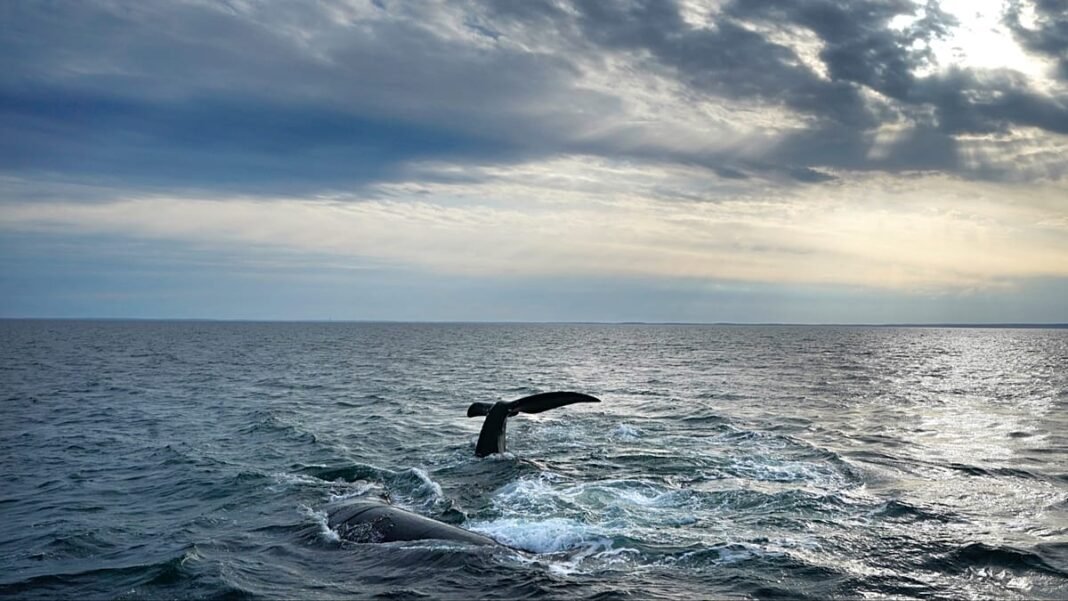


The long-awaited Treaty on the High Seas entered into force today, marking a “historic milestone” for the protection of the world’s oceans.
Covers almost half of the earth’s surface high seas They exist across borders and form part of the global commons. Until now, there has been no legal framework in place to protect the biodiversity of these high seas and ensure that the benefits of these resources are shared equitably between countries.
However, after decades of negotiations, the text of the treaty was finalized in March 2023, setting out clear obligations on how to ensure sustainable use of marine resources. It requires ratification (final approval and agreement to make the treaty legally binding) by 60 countries for it to enter into force, a milestone reached on September 19 last year.
Experts have hailed the agreement as a “turning point” in multilateral cooperation and ocean governance, but concerns remain about potential loopholes.
What are the high seas and why are they so important?
The high seas is often used to describe all areas beyond a country’s jurisdiction, such as the ocean floor and the water column (the vertical portion of water from the surface to the bottom). This corresponds to the high seas, which covers more than two-thirds of the oceans, or almost 50 percent of the Earth’s surface area.
Once thought to be barren and desolate places, scientists now consider the high seas to be one of the greatest reservoirs of biodiversity on Earth. It plays an important role in regulating the climate and supports the “important” things. carbon and water cycle.
In fact, the economic value of carbon stored in the high seas is estimated to range from $74 billion (approximately €63.62 billion) to $222 billion (€190.85 billion) annually.
However, human activity is a growing problem for the high seas. According to the High Seas Alliance (HSA), which advocated the treaty, destructive fishing practices such as bottom trawling and illegal fishing are harming marine life on the high seas.
Combined with plastic and chemical pollution, new activities such as seabed mining, and water acidification due to rising temperatures, the high seas are under serious threat.
What does the High Seas Treaty do?
The treaty, now international law, gives countries the power to establish a connected network of high seas marine protected areas (MPAs), which can be adopted by vote if no agreement can be reached. This helps prevent a single state from blocking the establishment of an MPA.
We also support developing countries through capacity building and marine technology transfer to help them develop, implement, monitor and manage future high seas MPAs.
Several legal obligations apply from today. For example, planned activities under the control of a Party that may impact the high seas or the seabed must be subject to the Convention’s environmental impact assessment process, and governments must publicly notify such activities.
Parties must also promote the objectives of the Convention when participating in other bodies, such as bodies governing shipping, fisheries and fisheries. seabed mining.
“At the halfway point of this critical decade, one of the world’s most ambitious ocean initiatives is ushering in a new era of systemic change in ocean governance,” said Earthshot Prize CEO Jason Knauf.
“This reflects a renewed commitment to our oceans, their wildlife, the millions of people who depend on their health, and the global goals set for 2030. The High Seas Treaty shows us that meaningful progress can be achieved with vision, perseverance and leadership.”
Will our oceans be properly protected?
Although the High Seas Treaty has been praised by governments, NGOs, and environmentalists around the world, there are still concerns about how effective the agreement will be in protecting the oceans.
“Today is a day to celebrate biodiversity and multilateralism, but the job of protecting our oceans is far from done,” says Sophia Czenikli of the Deep Sea Conservation Coalition (DSCC).
“While the High Seas Treaty significantly raises standards, it alone will not stop deep-sea mining from starting in our oceans.”
Several countries that have ratified the High Seas Treaty, including Japan and Norway, have expressed interest in mining vast tracts of the ocean floor in the race for vital minerals used in green technology.
“Governments cannot ensure that they protect marine biodiversity while allowing an industry that irreversibly destroys life and ecosystems we barely understand to proceed,” Czenikli added.
recent Deep sea mining test found that the controversial practice affects more than a third of seafloor animals, but a report released in 2024 by the Environmental Justice Foundation found that deep-sea mining is not actually necessary for the transition to clean energy.
That is why the DSCC is calling on all parties to the High Seas Treaty to use the momentum to establish a moratorium on deep-sea mining at the International Seabed Authority.
Dr. Enric Sala, founder of Pristine Seas, also warned that the treaty cannot ignore the value of protecting waters that belong to governments, as these are the areas where most fishing and other harmful human activities take place.
He said in a statement that protecting the nation’s waters “cannot be put on the backburner.”
“New MPAs, whether established on the high seas or on the coast, will only be effective if they are strictly protected and illegal activities are fully monitored,” Dr. Sala added.
“This is the only way marine protected areas can ensure climate, biodiversity and economic benefits.”