

In an era of growing polarization, rising inequality and a resurgence of populism, a new report argues that teaching the economic crisis in history classrooms is more than a lesson about recession, it’s a lesson in democracy.
Learning about past economic shocks can help students resist scapegoating narratives and build democratic resilience, according to the European Observatory for History Education (OHTE), a platform of the Council of Europe.
The report states that “fiscal and national currency crises and rising inflation are causing continued or recurrent economic instability in many European countries, which are closely linked to rising social inequality, xenophobia and questioning of democratic values.”
“Teaching about economic crises can provide students with the knowledge and skills to resist the unilateral and simplistic scapegoating of blame for economic crises to minorities and stigmatized groups,” OHTE continued.
The report is based on analysis of 17 European countries.
Perceptions of inequitable distribution fuel radicalism
The Council of Europe’s OHTE was created in 2020 to address issues related to history education on the continent. Until now, there was no centralized body to analyze what was being taught in one country versus the other.
This leads to a situation where strong populist movements may grow in certain countries, such as Hungary.
The report’s authors argue that teaching about economic inequality is an important aspect of understanding the country’s historical grievances and their impact on politics today.
A recent analysis published in the European Journal of Political Research found that people who believe their society is highly unequal are more likely to support populist parties.
According to the survey, voters who perceive there to be greater inequality in society are about 2.7 percentage points more likely to support populist parties than respondents who perceive society to be more equal.
He added that the influence of prominent and large right-wing populist parties, such as the Norwegian Progress Party, the Danish People’s Party and the Austrian Freedom Party, was particularly strong.
European Social Survey findings published in 2023 show that people who report financial hardship are significantly more likely to support populist parties than those who are better off.
ESS identifies this pattern across several countries and survey years, highlighting that perceived economic burden, not just income, helps explain tolerance for populist appeals.
Economic crisis teaches empathy
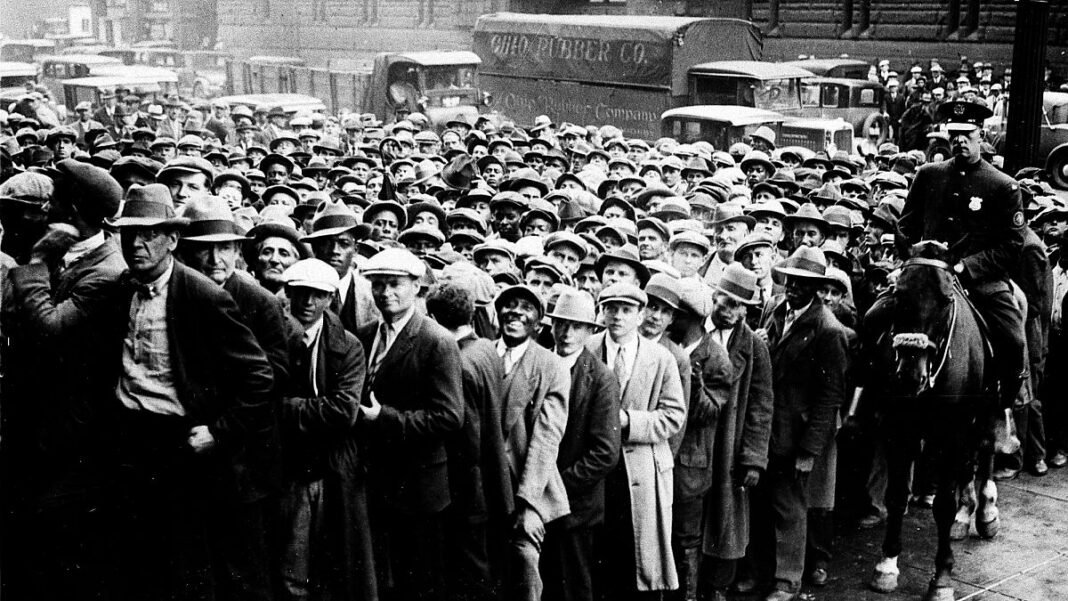
A new OHTE report recommends that economic history teachers should strive to link past events to concrete skills. In other words, rather than just “teaching students what the Great Depression was,” use the lessons to develop “empathy, tolerance, cooperation (and) tolerance for ambiguity.”
Teachers interviewed for this study reported that when their students faced a historic economic crisis, they were prepared to ask, “Why did this happen?”, “Who suffered?”, and “Who benefited?” “Is there a scapegoat running amok behind me?”
The OHTE report states: “Exploring questions like this helps learners understand that economic crises are not just economic phenomena, but often affect all aspects of social life.”
Economic education also allows students to understand that the outcome of a crisis is highly dependent on the current political system and historical period, the authors added.
Lessons on the economic crisis are included in national curricula in all 17 countries surveyed, and compulsory in 16 countries except Spain, where the inclusion of lessons on the economic crisis is left to the discretion of teachers.
This alone shows that the topic is widely recognized, but reveals little about how it is used and structured, and whether there is a general consensus across Europe on how to teach it.
“In the curricula of all member states except Georgia and Spain, economic crisis is clearly linked to struggles for and against democracy…The French Revolution and the crisis of socialist economies in the 1980s are the most frequently cited examples, with economic hardship cited as a driving force for mobilizing forces to make democratic demands successful,” the report explained.
Alternatively, “the economic crisis leading to the destruction of democracy in various European countries” is usually taught in relation to the rise of fascism and Nazism as a direct result of the Great Depression.
A challenging simplistic story
Among its recommendations, the report also suggests that the economic crisis could be taught from the perspective of minorities and vulnerable groups. The authors say this can be used as a means to subvert extremist-friendly narratives such as “some group did it,” “they’re always exploiting us,” or “the system is rigged by X.”
For example, the report criticizes the fact that lessons on the economic crisis rarely focus on the specific challenges faced by groups such as the LGBTQ+, Roma and Jewish communities.
Although women’s perspectives on the economic crisis are included in six of the 17 countries analyzed, “there is no reference to LGBTI history in any country’s curriculum or textbooks.” Only 3.4% of teacher survey respondents said they incorporate LGBTQ+ perspectives into their lessons.
“Economic crises have historically increased the likelihood of prejudice and persecution, especially against minorities (such as pogroms against Jews). Roma history is only mentioned in the French curriculum, and only 10.3% of teachers reported incorporating this perspective into their lessons,” the report said.
Beyond economics — the interdisciplinary gap
OHTE concluded that an important element is missing when it comes to education about the economic crisis in Europe.
Although this topic features heavily in the curriculum, the way it is taught is often narrow, focusing on macroeconomic data and timelines rather than exploring its impact on humans and society.
Teachers in several countries report that the crisis is creating “natural bridges between economics, politics and society” but lament the lack of structured cross-curricular resources available to teach the subjects in this way.
Comparing today’s cost-of-living pressures, energy fluctuations, and uneven recovery to previous events, such as the eurozone crisis, helps students draw lessons from history.
Between slowing growth and tariff shocks, compounded by an aging population, Europe faces a difficult economic road ahead. In such environments, past crises may provide a framework for understanding the current crisis.