

Release date
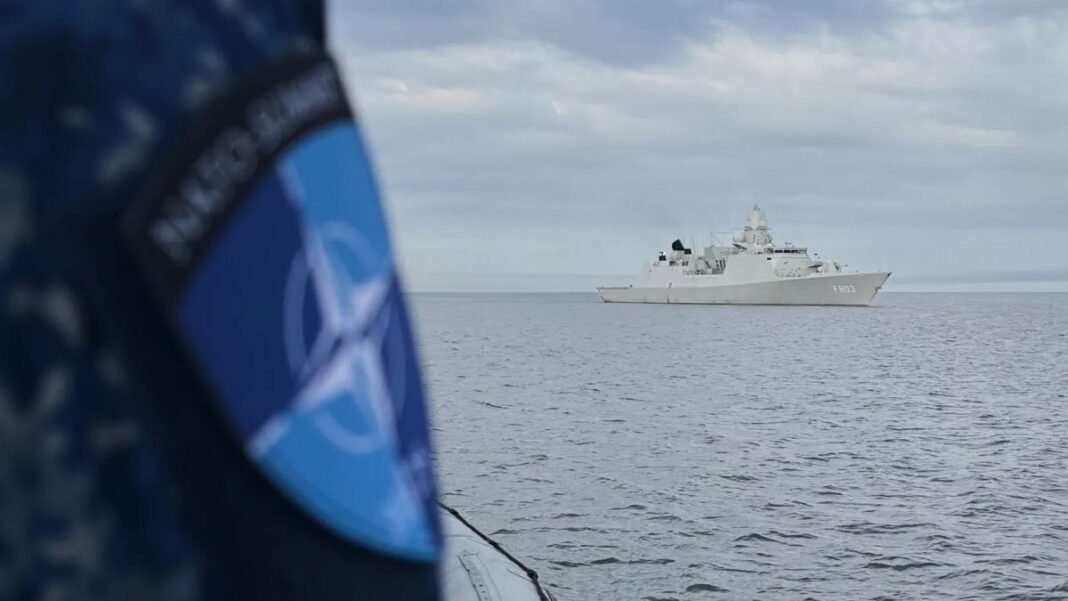
NATO’s annual large-scale nuclear exercises are starting to wind down in the Netherlands, with a key part of the exercises focused on protecting weapons before they are used.
Steadfast Noon began on October 13th and included 71 aircraft from 14 NATO countries.
The long-planned exercise comes amid heightened security around military facilities in Europe following a series of airspace violations by drones, some of which have been blamed on Russia.
“We haven’t talked about this for a long time, but it’s certainly time to talk to the public about this,” said Col. Daniel Bunch, NATO’s chief of nuclear operations. “We’ve seen the rhetoric continue from Russia. And again, this is not about a sword fight, this is about proving that this can be done at any time.”
Bombers and fighter planes capable of carrying nuclear warheads took off from the runway during the exercise, but no nuclear weapons or live ammunition were used.
Most of the exercises took place in the North Sea, far from Russia and Ukraine, and also involved military bases in Belgium, Britain, Denmark and the Netherlands.
But the threat posed by Russia is clearly in the minds of the leaders of this joint exercise.
“We are mentally preparing our actual mission personnel at a tactical level to be able to carry out this mission,” Lt. Col. Bram Versteeg, commander of Royal Netherlands Air Force 312 Squadron, said on Tuesday.
“Not just anyone can do it. This is a special mission within NATO, a special mission within the Allies, and a special mission within the Dutch Air Force.”
The United States and Britain have nuclear forces and are key to NATO’s strategic deterrence. France also has nuclear weapons, but is not part of the organization’s nuclear program group.
NATO officials did not say what scenario was used to test the 32-nation alliance’s nuclear readiness, but insisted it was not targeted at any particular country or related to the current international situation.
The United States offers F-35 jets that can carry conventional and nuclear weapons, as well as refueling planes and other support aircraft. Finland and Poland also sent fighter jets.
Electronic warfare equipment and reconnaissance and intelligence systems will also be used.
The Washington Summit Declaration, agreed to by alliance leaders last year, states: “The fundamental purpose of NATO’s nuclear capabilities is to maintain peace, prevent coercion, and deter aggression.”
“As long as nuclear weapons exist, NATO will remain a nuclear alliance,” he said.
James Stokes, director of NATO’s Nuclear Policy Directorate, told reporters that despite the Kremlin’s continued and fiery rhetoric, the allies have recently seen “no change in Russia’s nuclear posture.”
He stressed that Russia was not the focus of the exercise, but said NATO continues to monitor Russia’s military activities, including the use of dual-capable missiles capable of carrying nuclear warheads in Ukraine.
Steadfast Noon ends on October 24th.
Additional sources of information • AP