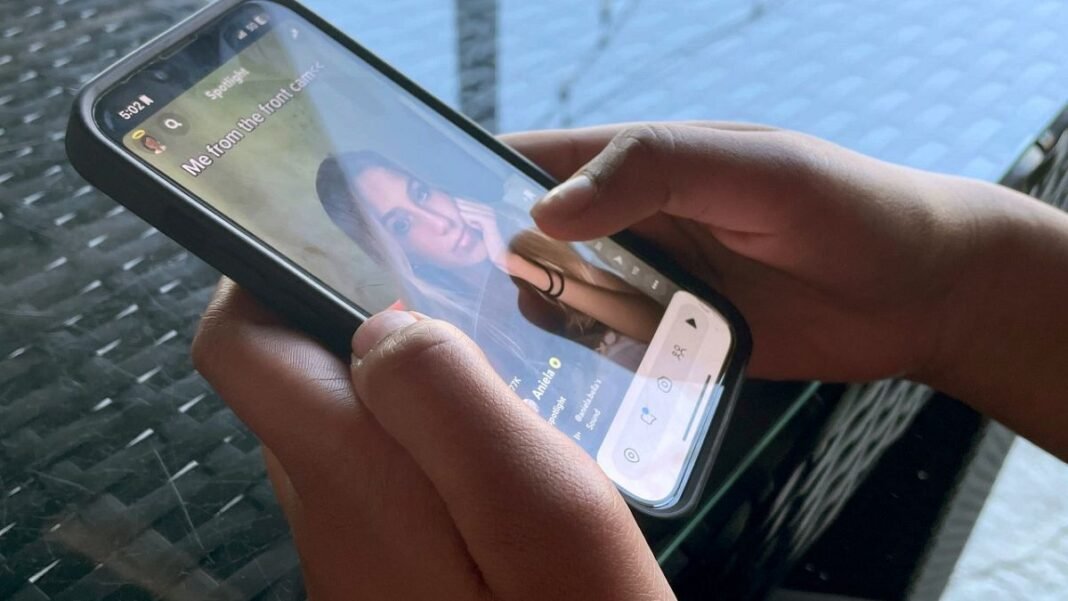


EU ministers on Friday pledged to step up efforts to protect children online, but stopped short of following Denmark’s plan to ban social media for children under 15.
Denmark’s Jutland Declaration was drafted by the Nordic country, which is hosting the EU ministerial meeting for the second half of 2025, and was signed by 25 member states, excluding Estonia and Belgium, at an informal meeting of national telecommunications ministers on Friday.
Ministers said they would consider whether further measures were needed to complement existing EU rules, as minors were at increased risk of being exposed to illegal, harmful and extremist content and “needed stronger and more targeted protection”.
A 2024 WHO study found that problematic social media use among adolescents increased from 7% in 2018 to 11% in 2022. More than one in ten (11%) young people show signs of problematic social media behavior, struggle to control their use and experience negative consequences, the study says.
One tool to reduce the negative impact of illegal and age-inappropriate content is effective age verification. These tools could be included in the next Digital Fairness Act, which the European Commission will lay out rules for early next year.
“Age verification is the norm for age-restricted products and services in the offline world, so it is reasonable to expect similar safeguards online, where the risks, especially for minors, are significant and well-documented,” the declaration said.
“Without proper and reliable age verification, it is difficult to prevent, for example, social media from targeting minors with adult content and features, putting their health at risk,” it added.
The declaration argues that existing rules, such as the Digital Services Act (DSA), an EU-wide rulebook that requires online platforms to fight illegal content online and increase transparency around content moderation, may not be enough.
“The most important thing is to have rules in place. The Digital Fairness Act is the quickest way to take action now. However, the rules should not overlap with other rules,” Danish Digital Minister Caroline Stage Olsen told reporters.
Denmark considering ban on social media for under-15s
Earlier this week, Denmark’s Prime Minister Mette Frederiksen announced plans to introduce a ban on social media for children under the age of 15, with the aim of “better protecting children and young people in a digital reality in which many people are experiencing decreased well-being and increased dependence on social media.”
In the EU, children must be at least 13 years old to open a social media account, but Frederiksen cited data showing that 94% of Danish children had social media before that age.
European Commission President Ursula von der Leyen said last month that the EU Executive had set up an expert committee to report on how social media use by children in the EU could be restricted, taking into account Australia’s actions in this area, which barred young people under 16 from using social media platforms such as Snapchat, TikTok, Facebook, Instagram and X.
Ministers from Germany, the Netherlands, Spain and Cyprus told reporters ahead of the meeting that they supported Denmark’s efforts but that their countries had no intention of introducing a ban.
“We don’t want a ban, but we want to protect our youngest children from the negative aspects of technology,” said German State Secretary Thomas Jazonbek.
Greece’s Digital Governance Minister Dimitris Papasterziou said there are various factors to consider.
“What about children under 12? There is a more mature age of 12 to 15. I believe this is just a single category of age verification,” Papastelgio said.
The platform was also asked
On Friday, the European Commission also asked online platforms Snapchat, YouTube, Apple and Google to provide more information about their age verification systems as part of their efforts under the DSA.
The commission said it wanted to know what steps it is taking to prevent minors from accessing illegal products, including drugs and e-cigarettes, or harmful content, such as content that promotes eating disorders.
The DSA took effect in 2023, and since then, the commission has opened 10 investigations into platforms including X, TikTok, and Meta’s Facebook and Instagram for a variety of alleged violations, including election integrity and recommendation systems.
The case is still ongoing and the investigation is not yet complete.