

Release date
ArcelorMittal announced plans to invest in the electric furnace at its Dunkirk plant in May 2024, and officially confirmed the investment on February 10, 2026. The announcement was attended by French President Emmanuel Macron, European Commissioner Stéphane Séjournet and several ministers, and the total planned investment is 1.3 billion euros.
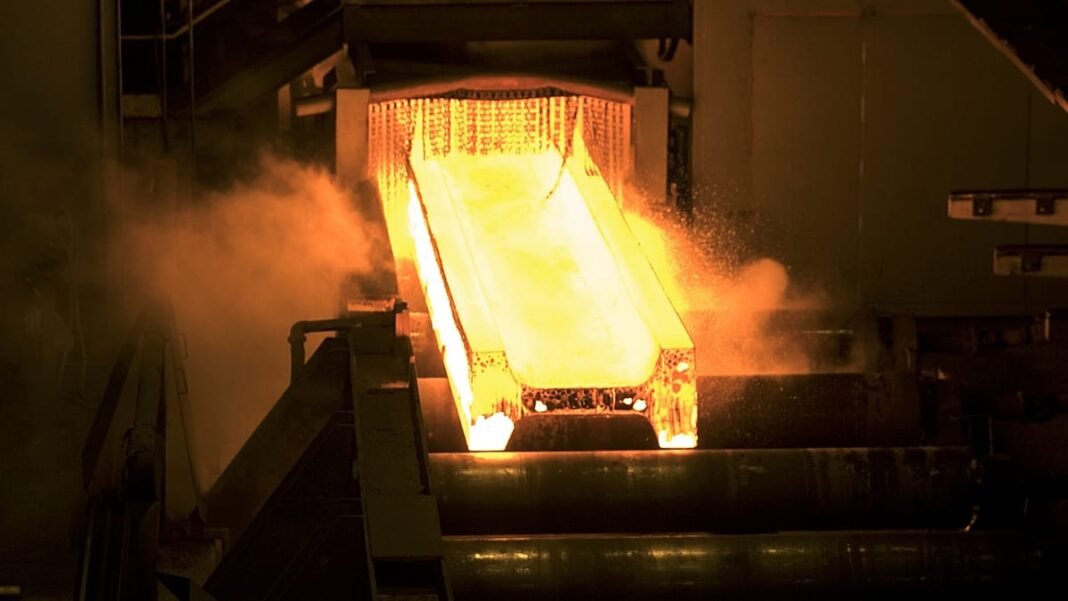
According to the company, the project will enable the construction of an electric furnace with a capacity of 2 million tons per year, which is scheduled to start operating in 2029. The purpose is to produce steel without using coal, and burning coal emits large amounts of CO₂, which contributes to global warming.
The electric furnace investment forms part of the company’s outlined strategy to transition some of the group’s European steel plants from coal to hydrogen. The Dunkirk facility is a significant source of pollution, accounting for around 15% of industrial CO₂ emissions in France.
Up to 50% of the investment will be funded through the Energy Efficiency Certificate Scheme (CEE), a government regulatory mechanism that obliges energy supply companies to support projects aimed at reducing energy consumption.
investment delay
However, ArcelorMittal has long been reluctant to make a formal investment commitment. When first announced in May 2024, the steelmaker said confirmation would be expected “after the summer.”
That confirmation finally came more than a year and a half later. The company justified the delay in November 2024 by saying it was waiting for “additional measures to protect European steel before committing to investments.”
Some of these measures have since materialized, in particular with the Carbon Border Adjustment Mechanism (CBAM) entering its final stage on 1 January 2026.
“The decision to build an electric furnace at ArcelorMittal Dunkirk to produce low-carbon steel on a large scale for our customers was made possible by the conditions currently in place to realize this project,” Geert van Poelforde, CEO of ArcelorMittal Europe, said in a statement. “While new tariff quotas will help stem the flow of unfair imports into the EU, MACF is now being operated to create a more level playing field for European producers.”
Long-requested by European steel producers, CBAM is designed to subject goods imported into the EU’s customs territory to carbon pricing similar to that faced by European steel producers.
Support from the French government
The project also receives support from the French government. In 2023, ArcelorMittal received approval for a €850 million grant to support the decarbonization of its Dunkirk and Fos-sur-Mer facilities.
A second factory that Emmanuel Macron has not forgotten. During his visit to Dunkirk, the French President addressed the group: “Please watch the adventure to the end” and “Build a second reactor and continue hydrogen”, Don’t just give “The future of Fos-sur-Mer”Another major French site for ArcelorMittal.
The formal signing of the 1.3 billion euro investment appears to have reassured the French president that the leading French steelmaker, and Europe’s largest, intends to remain in the country.
That sense of security is not something that everyone can share. Gaëtan Lecoq, head of the CGT trade union in Dunkirk, said he was waiting for “concrete things” and a “firm date” for the construction of the electric furnace. When ArcelorMittal announced its 2024 investments, it also confirmed plans to cut 638 jobs in France.