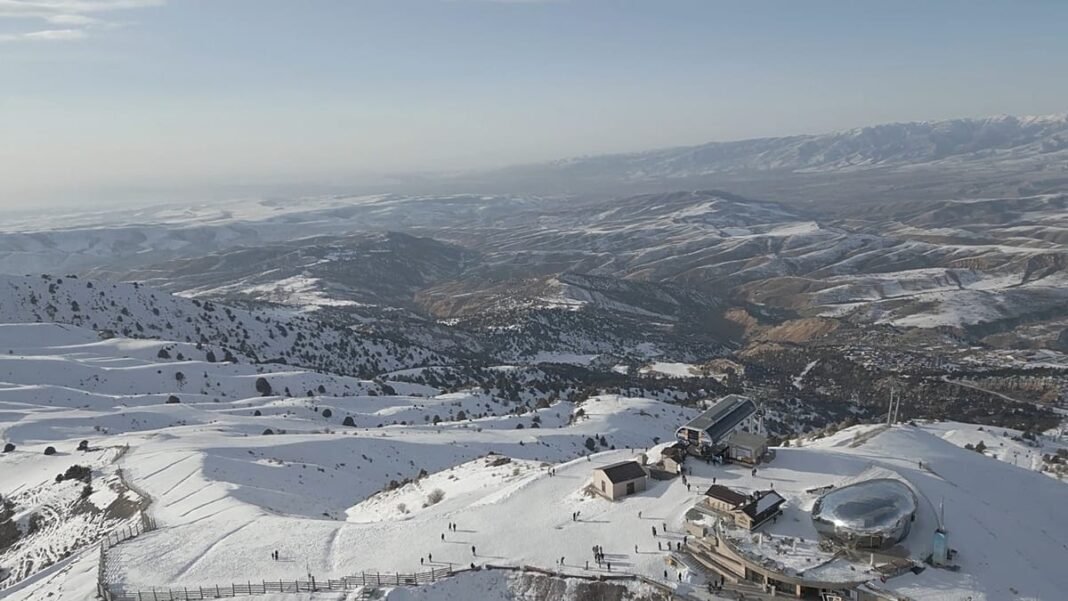


For decades, Uzbekistan has been best known internationally for the mosaics of Samarkand, the madrassas of Bukhara and the walls of Khiva. But in winter, the country reveals a different side: snow-capped mountains, alpine resorts, outdoor adventures, and seasonal experiences that are changing the shape of tourism.
“I had heard about Uzbekistan before coming, but I never imagined how beautiful it would be,” says Wee Yun Nee, a content creator from Malaysia who was visiting the country for the first time. After exploring Tashkent and Samarkand, she headed to the Amirsoy ski resort east of the capital. “The skiing experience here is amazing. The mountain views are breathtaking. Winter in Uzbekistan exceeded all my expectations.”
Her impressions reflect broader trends. As temperatures drop, Uzbekistan’s mountains become centers of activity, and cities and rural areas develop winter attractions that appeal to both international travelers and local families.
Amirsoy: the new face of tourism in Uzbekistan
A short drive from Tashkent, the Chimgan Mountains rise steeply and transform into a winter playground. Here, Amirsoy Ski Resort is at the heart of Uzbekistan’s growing winter tourism sector.
Rustamjohn Raimjonov, general manager of Amirsoy, which stands at the resort’s highest point at 2,290 meters above sea level, comments on its rapid development: “Previously, Uzbekistan was mainly known for Samarkand, Bukhara and Khiva. Now the country is also gaining recognition for new ski resorts.”
The numbers highlight this change. In 2024, Amir Soi welcomed 700,000 visitors. By 2025, that number will exceed 800,000, of which more than 20 percent will be from abroad. “Most of the foreign tourists come from Europe, including Germany, France and Switzerland, as well as the United States and neighboring countries,” Raimjonov said.
The resort has more than 11 ski runs spanning 16 kilometers and is operated by the state-of-the-art Austrian Doppelmayr lift system. Today, the number of visitors per day exceeds 15,000, and new infrastructure continues to expand, including a hotel with more than 100 rooms built to European standards.
Despite competition from established ski areas, demand continues unabated. “Kazakhstan has its own resorts, but the snow in our country is softer and has a unique quality. That is why tourists enjoy skiing here,” said Raimjonov.
learn the slopes
Skiing is still a new experience for many local tourists. Andrei Yusupov, a tourist from Tashkent, tried skiing for the first time last year. “I was scared at first. I felt that injuries in sports were dangerous,” he admits. “But once you try it, you can’t stop.”
He now returns regularly with his wife. “You can see how many people come here. Everyone loves this ski resort. Uzbekistan is rapidly developing alpine skiing and attracting tourists even from countries that already have mountains.”
The demand for instructors is increasing. Saiftdin Musaev has been skiing since childhood and now teaches beginners. “The flow of tourists and skiers has increased dramatically. Every year there are more people, including many foreigners,” he says. “Children are especially quick learners. Once you overcome your fears, everything becomes easier.”
Safety during high season
As the number of international arrivals increases, support services are also expanding. The tourist police in Bostanlik district respond to requests ranging from directions to lost belongings.
“Most of the inquiries come from foreign tourists,” explains Nodir Ismanov, the district’s safe tourism officer. “We assess each situation and provide immediate assistance. We recently helped a visitor from the UAE recover a lost ring worth US$5,000.”
These services are part of a broader effort to help travelers explore Uzbekistan’s winter destinations with confidence.
Chimgan: Spend a day in the mountains
A more relaxing winter holiday can be had in the Chimgan Mountains, not far from Amir Soi. At more than 3,300 meters above sea level, this area attracts day-trippers with sleds, picnic baskets, and simple plans for enjoying the snow.
Visitors can choose between an old chairlift or a modern enclosed gondola and enjoy a variety of activities, from quad bikes and snowmobiles to horseback riding and tubing tracks. New attractions introduced through international projects are expanding Chimgan’s appeal beyond traditional winter sports.
“Here you can work and relax at the same time,” says a local operator. “You meet different people every day, and the atmosphere depends on your mood. It’s always lively.”
Deer Hills: Quiet Winter
For families looking for tranquility rather than adrenaline, Deer Hills Farm offers a different winter experience. The reserve, about an hour from Tashkent, started in 2020 with 90 deer imported from Europe. The herd has now grown to over 150 animals.
“People come here with their families to relax and make their children happy,” says farm manager Izzat Vohidov. “They walk among the deer, feed them, ride their horses and enjoy nature.”
Tourists arrive from Kazakhstan, Kyrgyzstan, Azerbaijan and the Gulf countries. Winter is the most popular season. “Snow, deer and the Christmas atmosphere remind people of Christmas. It becomes a memorable family experience,” explains Vohidov.
Unlike traditional zoos, Deer Hills allows visitors to move freely among the animals, fostering closer contact with nature. Expansion plans include a hotel, restaurant and new animal enclosures to further develop local ecotourism.
winter in the capital
Not all winter activities take place in the mountains. Kumo Arena in central Tashkent brings ice sports indoors, allowing you to skate all year round regardless of outdoor conditions.
“This is a modern ice arena where hockey players and figure skaters train,” said Sabina Berdykulova, development manager at Spider Arena. “We also hold mass skating sessions. It is also chosen by foreigners. I recommend tourists to visit when they come to Tashkent.”
new travel season
From high-altitude ski trails to tranquil nature reserves and urban ice rinks, winter tourism in Uzbekistan is growing in size and variety. Once known solely for its Silk Road heritage, the country is now developing a reputation as a destination for modern leisure, outdoor adventure, and family escapes.
At the end of his trip, Wee Yun Nee reflected, “Uzbekistan, Tashkent, Samarkand and Amirsoy gave me an experience I will never forget. I will definitely return.”
Winter is no longer the off-season for Uzbekistan. It is becoming an invitation to new explorations.